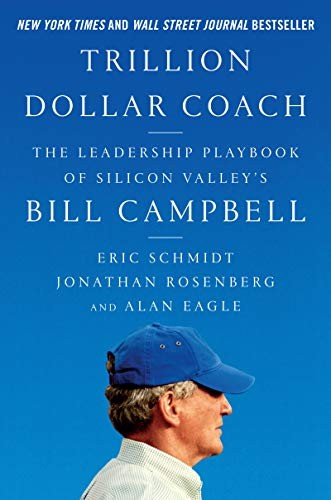
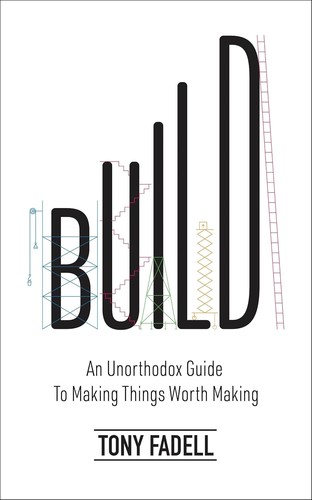
I recently listened to two books back to back: Trillion Dollar Coach, about Bill Campbell, and Build by Tony Fadell. Campbell mentored Fadell, so I expected overlap. But the books come from different places: Campbell coached leaders of established, scaling companies, while Fadell writes for people building something from nothing. Three themes run through both, and each looks different depending on the phase.
1. The product is every interaction with the company
My favorite idea in Build is that your product isn't only your product. It's the whole experience of the company, from the moment someone first hears about your brand. Fadell prototypes the marketing long before there is something to market. He cares about the packaging, because opening the box is often a customer's first physical moment with you. At Nest he even designed the screwdriver that came in the box, so that installing a thermostat, a chore most people dread, felt considered.
This fits the early phase, when nothing is separate yet. The demo, the website, the box, the support email and the pricing page are all the product, and one small team decides all of them.
It resonated with how I think about interviews. As an interviewer, I see the interview process as one of the most important interactions a person has with the company, and often the first real one. A candidate who had a good experience may join, come back for a future role, recommend a friend, or become a user of the product. One who had a bad experience will tell that story instead. The candidate is not the only one being evaluated.
Campbell saw engineers as the most important people in a company's success, and product innovation as the key to survival. That sounds like a narrower view, but I think it is mostly a later phase: in a large company no single person touches everything, so who has authority over the product becomes the question. Fadell's lens still applies there. If the product is every interaction, every function owns a piece of it, and engineering is not the only team that can break it.
2. Being coachable, seen from two sides
For Campbell, coachability was a precondition. He defined it as honesty, humility, willingness to work hard, and openness to learning, and he only coached people who had it. When Jonathan Rosenberg came to Google to close his job offer, Campbell's opening question was "Are you coachable?" Rosenberg answered that it depends on the coach. Campbell told him that smart alecks are not coachable and stood up to leave. Rosenberg got the job anyway, and the coach he didn't think he needed: for the next decade the two met every two weeks, and Rosenberg went on to co-write the book. The question was a filter: if a person can't take feedback, the coaching can't work, however good the coach is.
Fadell comes at it from the other side, as the person looking for guidance. He is blunt that "you can't make it without a mentor," and describes the right one as someone who has done it before and believes in you. Campbell asks who deserves a coach, and Fadell asks what to look for in one. Each is a necessary condition and neither is sufficient on its own: an experienced mentor is wasted on someone who can't be coached, and a coachable person still needs someone worth learning from.
3. People or team?
Both books put humans ahead of the problem, but they look at different units. Campbell thinks in teams. Faced with a problem or an opportunity, his instinct was to check that the right team was working on it before touching the problem itself, and a team-first attitude was one of the traits he valued most in people.
Another Campbell line that stayed with me is that money is not about money. Compensation is not only what someone can buy with it. It is a signal of love and respect, of how much the company values a person, and it ties them to the company's goals. That is why it matters even to people who no longer need the money: it is how they know their contribution is seen.
Fadell thinks in people. His attention goes to who you hire: he looks for people who are mission driven and passionate about the customer, keeps a "no a-holes" policy, and describes a near-perfect team as "smart, passionate, imperfect people who complement one another." The team is the result of getting the individuals right.
I think the phase explains it. In a young company you are still choosing who is in the room, and each early hire shapes what the product will be. In a large company the people are already there, and the question becomes whether they work as a team and whether it is the right team for this problem.
Ron Wallace's Leadership Lessons from a UPS Driver, which I wrote about earlier, sides with Campbell: the best 5, not the 5 best. Five average players who move as a unit beat five stars who don't. And if every interaction is the product, that unit is everyone who touches one of those interactions, not just the people who write the code.