I was reading The Illegals by Shaun Walker and listening to Chip War by Chris Miller. The Illegals is about Russia's deep-cover spies, who spent decades living fake lives in the West. Chip War is a history of the semiconductor industry and the competition between the US, Taiwan, China and others to control it.
Then the news broke that Jensen Huang had admitted to an affair, and the coverage included an alleged Chinese spy. A few days later he resigned as Nvidia's CEO. The spy allegation is unconfirmed, and even Trump said it isn't clear. My reading list started to feel like a Truman Show plot, and I'd like to see the producer's notes.
Here are a few thoughts from the overlap.
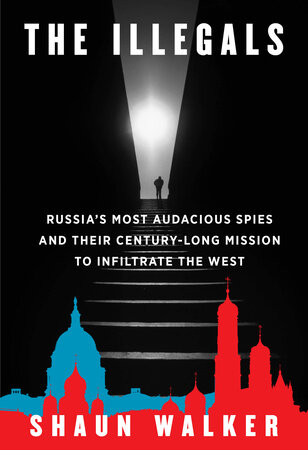
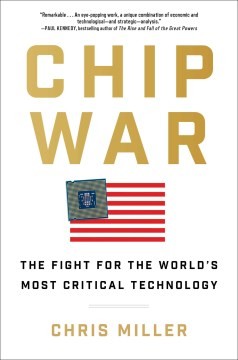
1. Modern Russia is barely in Chip War
In Chip War, Russia is barely on the map. The Soviet Union copied Western chips instead of inventing its own, and Miller's account suggests that kept it a step behind. Today Russia makes almost no advanced chips but buys plenty. Western components keep turning up inside downed Russian missiles, routed through intermediaries in Kazakhstan, Turkey, the UAE and elsewhere. One passage in the book stayed with me, as I remember it: Russia using unguided missiles in the war with Ukraine because of its chip shortage, while Ukraine received guided weapons from the West.
My first instinct was to compare this to Russian oil: plenty in the ground, mediocre quality. The comparison doesn't hold. Oil comes out of the ground, while a chip industry needs thousands of suppliers and lithography machines that only ASML in the Netherlands can build. Russia also lost talent after 2022. Taiwan shows that government backing can build a chip industry. China shows the limits. After years of state money, it still can't buy the most advanced machines. If Moscow made chips a priority, it could get somewhere, maybe not to the frontier, but far enough for many use cases.
2. Already outdated?
Chip War came out in October 2022, a month before ChatGPT. Nvidia is in it as one of the players, not the main character. Since then, AI workloads have turned GPUs into the most contested product in the industry, and Nvidia is now worth about ten times what it was at the end of 2022, even after the recent drop. The US has tightened its export controls, and Nvidia has spent the last few years negotiating what it can and can't sell to China. At one point it agreed to give the US government a 15% cut of H20 sales there, and then Beijing raised security concerns about the same chips. Huang himself said in late 2025 that the company was effectively blocked from selling into China.
Reading Chip War in 2026 is like reading a field guide to a forest that has since been replaced by a data center. The data centers aren't only a metaphor. Building them was one of the top issues in the US midterms three weeks ago, mostly because of what they do to electricity bills, and voters backed restrictions on data centers in 40 of 41 local ballot measures.
I'd love an updated edition. Kevin Roose's The AGI Chronicles is next on my list. It's about a different race, the one to build AGI, but a related one. That race runs largely on Nvidia's chips and on Nvidia's money, which it has invested in many of the companies running it, Anthropic among them.
3. Spies go where the value is
Both books are partly about spies, and together they show how the target changes. Under Stalin, it was political and military secrets, and the illegals were the elite tool for getting them. Christopher Andrew writes that they "were far more successful in both Britain and the United States under Stalin than under Putin." In Chip War, the target is know-how, and the spies, mostly Chinese, work as many hands instead of one deep cover: insiders, recruited engineers, a steady flow. If the Huang allegation turns out to be true, it fits the pattern, since a lot of the value now sits at the top of a chip company.
The Illegals ends with the newest target: narratives. That made me look at Chip War with one eyebrow up. History is written by the winners, the saying goes, and the chip war has no winner yet. Chip War is already writing its history anyway, a very US-centric one, with the US as the protagonist and export controls as the plot. I don't think the book is an influence operation, but telling the story of a war while it's still being fought is a way of shaping it, and maybe of telling the audience who's going to win.
4. War minus the shooting
In his 1945 essay "The Sporting Spirit," George Orwell wrote that serious sport "is war minus the shooting." He wrote it after a Soviet football team, Dynamo Moscow, toured Britain. The US and the Soviet Union then spent decades proving him right. The US led a boycott of the 1980 Moscow Olympics over the invasion of Afghanistan. The Soviet Union and its allies skipped the 1984 Games in Los Angeles, officially over security, and most people saw it as payback. Nobody fired a shot. Each side just denied the other its audience.
The chip war is the same kind of contest, and it has gotten hotter since the book was written. An export control is a boycott with a price tag. It keeps the other side out of the stadium, except the stadium is a fab and the price falls on companies like Nvidia. Even the workarounds look familiar. Russian athletes now compete as "Individual Neutral Athletes," with no flag, which is the same trick as a chip routed through a third country.
I'm now waiting for the next chapters. Huang is expected to testify before the Senate before Christmas, and somewhere I imagine there's a control room where someone just said "cue the Senate hearing."